



California Divorce Financial Disclosures: What to Gather and How Mediation Helps

What date should you use for your bank balance? Is your home worth what Zillow says, what Redfin says, or what you and your spouse agree it is worth? If an account existed before the marriage, do you still have to list it?
These are some of the most common questions couples ask when they start preparing financial disclosures. The good news: you don’t need every answer before you begin. You need to identify what you own and owe, gather the records you can, and be clear about where each number comes from.
Good preparation gives both of you the same reliable financial picture before you make decisions about property, support and running two households. That shared picture is what makes the negotiation productive.

The short answer: which values do I use?
The instructions on the Schedule of Assets and Debts (form FL-142) say values should be as of the date you sign it, unless you note a different valuation date in the description. So start with current information, write down the date and source of each figure, and flag anything that’s an estimate.
For example: If you complete the form on October 19 using a September 30 statement, enter the statement balance and label it “as of September 30, 2026.” Flag any significant change since that statement. You do not need to guess a new balance just because you are signing on a later date.
The value on your disclosure is not automatically the value used to divide an asset. The value and date ultimately used may require updated records, legal analysis, an appraisal or agreement between you.
What financial disclosure means in a mediated divorce
Financial disclosure is the exchange of information about your property, debts, income and expenses. In a California mediated divorce, both spouses must provide the required financial disclosures. Reaching agreement does not replace disclosure: both of you need enough information to understand the agreement you are signing.
Listing something is not giving it away. Disclosure, ownership and division are separate questions. An asset may be separate property, community property or a mix. List it and state your claim; the FL-142 even has a column where you mark “P” or “R” for property you contend belongs to the Petitioner or Respondent separately. Leaving an item off because you believe it’s yours creates far bigger problems than listing it.
Include assets held in your name, jointly, or through a business or trust you have an interest in, and include debts even if you dispute who should pay them. Getting everything on the table early is what lets you resolve disagreements openly instead of discovering them late.
Which forms do we need, and what goes to the court?
| Form | Purpose |
|---|---|
| FL-140 — Declaration of Disclosure | The signed cover form identifying the financial documents and information you are exchanging. |
| FL-142 — Schedule of Assets and Debts | Your inventory of property and debts. Property Declarations (FL-160) can be used instead. |
| FL-150 — Income and Expense Declaration | Each spouse’s income, deductions and expenses. |
| FL-141 — Declaration Regarding Service | Confirms the disclosures were served. This one is filed with the court. |
More than a list of balances. Include relevant explanations and supporting records so both spouses understand material facts affecting community asset values and debts. FL-140 identifies these additional disclosures; they may require attachments rather than another court form.
Deadlines. In a standard petition-and-response case, the petitioner generally serves preliminary disclosures within 60 days of filing the petition, and the respondent within 60 days of filing the response. The time can be extended by written agreement or court order. If you file together using California’s joint petition (form FL-700, available since January 1, 2026), each spouse generally serves within 60 days of filing it.
Sending records to the mediator is a preparation step. Each spouse must also complete the required disclosure exchange with the other spouse, and proof of that exchange is filed with the court. The office guides you through those steps.
Exchanged, not filed. The disclosure package normally goes to your spouse, not the court; FL-141 is the court’s proof that it happened. (An FL-150 may be filed separately when support is requested from the court.) If you serve by mail, it must be mailed by an adult who isn’t a party. See the California Courts exchange instructions.
Waivers. Preliminary disclosures generally can’t be waived. Final disclosures can be waived by agreement on FL-144 when the legal requirements are met, but that never excuses inaccurate information or needed updates.
The financial documents to gather
Use this list to organize the work. Start with recent statements; more history may be needed for a specific issue, such as tracing a separate-property claim, but twelve months of every statement isn’t a universal rule.
| Category | Useful records |
|---|---|
| Taxes and income | Tax returns and schedules, W-2s and 1099s, recent pay stubs, bonus and commission records, rental statements, business distributions. |
| Bank and investment accounts | Recent complete statements; older records around the separation date or transfers if they matter. List cryptocurrency holdings and wallets — but never share private keys or recovery phrases. |
| Retirement and pensions | Current statements, plan summaries, pension benefit estimates, loan balances, and balances near the date of marriage and separation if available. |
| Real estate | Deeds, mortgage and HELOC statements, property tax bills, appraisals or market estimates, purchase records, and proof of down payments or improvements. |
| Businesses and equity compensation | Ownership documents, business returns and financial statements, RSU and option grant agreements, vesting schedules, exercise and sale records. |
| Vehicles and other property | Ownership or lease information, loan balances, resale estimates. Note valuable jewelry, art and collections. |
| Debts and taxes owed | Credit card and loan statements, tax notices, student loans, solar financing, and documentation of loans from family. |
| Insurance and other items | Cash-value life insurance statements; term policy coverage amounts and end dates; rewards and frequent-flyer points, deposits, refunds, education and children’s accounts. |
Tax returns: FL-140 calls for all tax returns you filed in the two years before you serve the disclosure. That can differ from “the last two tax years” if you filed late or amended a return. FL-150 also asks for your last two months of pay stubs and proof of other income.
Privacy: redact Social Security numbers from copies you send to the office, and follow the office’s instructions for other account identifiers.
Make the records easy to follow: group them by category and label each file with the institution, account ending and statement date—for example, “Checking-1234-2026-09-30.pdf.” Include every page of each requested statement. For a joint account, use one consistent balance in the shared inventory so it is not counted twice.
Current value or separation-date value?
Several dates come up, and mixing them up is the most common source of confusion:
| Date | What it tells you |
|---|---|
| Acquisition date | When you got the asset. The FL-142 asks for it, but it isn’t the valuation date. |
| Separation date | Matters for identifying earnings, contributions and property claims. Keep statements from around this date. |
| Statement or estimate date | The actual date a balance, payoff or estimate reflects. |
| Signing date | The default valuation date under the FL-142 instructions, unless you specify another. |
| Settlement valuation date | The date you agree to use when dividing a particular asset. It should be stated clearly in the agreement. |
What if the market changes after we separate?
Separation does not automatically freeze the value of a community asset. A home or investment account may rise or fall with the market while you work toward an agreement. For a community asset, market gains and losses generally remain part of the value to be divided; separate-property interests and post-separation contributions or withdrawals still need to be accounted for.
In mediation, you can agree on an appropriate valuation date and how to handle changes before the asset is actually divided. If the court decides the division at trial, Family Code section 2552 generally calls for valuing community assets and debts as near as practicable to trial, although the court can use an earlier date for good cause. The date and balance on your initial disclosure do not automatically lock in the final division value.
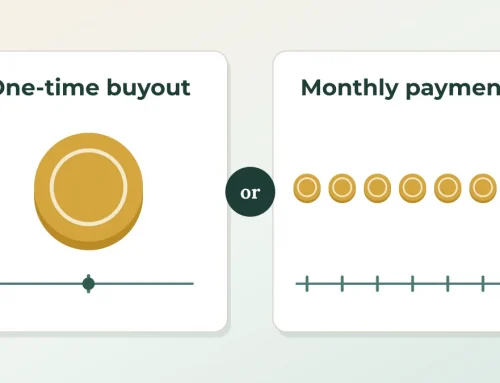
For an account divided by percentage, the agreement should also explain whether investment gains and losses are shared through the actual transfer date. That avoids treating an old statement balance as a fixed payout when the account has since changed.
Can we use the same month-end date for all our accounts? Often, yes — a common statement date makes comparisons easier. Label the date, keep the statements, and point out any significant changes since then.
Example: three numbers for one account
An investment account held $150,000 at separation, shows $162,000 on the latest monthly statement, and is worth about $165,000 on the day the disclosure is signed. Label whichever figure you list with its date, keep the separation-date statement, and note the change. None of these numbers alone answers what the community share is; contributions, withdrawals, market growth and any separate-property claim still need to be worked through.
Valuing common assets
The family home: list the value and the mortgage separately
The FL-142 has separate columns for “current gross fair market value” and the amount owed. For a starting estimate, Scott may have spouses compare Zillow and Redfin figures and note the source and date. That’s a working number, not an appraisal or an agreed settlement value.
If estimates differ meaningfully, a realtor’s market analysis or an appraisal can help. If you’ll get more than one opinion, agree in advance how you’ll use them, so the reports don’t become a new argument.
Example: value versus equity
A home is worth about $1,000,000 with a $400,000 mortgage. On the form, the value is $1,000,000 and the mortgage is listed as the amount owed. The equity — $600,000 before other loans or adjustments — comes from the two columns; don’t enter $600,000 as the value and subtract the mortgage again.
Now suppose one spouse thinks the home is worth $1,000,000 and the other thinks $1,040,000. In a simple equal-share buyout, that $40,000 gap changes the buyout by $20,000. Seeing both scenarios side by side often makes it easier to decide whether an appraisal is worth the cost. (Hypothetical; assumes equal interests and no other adjustments.)
Separate-property contributions, family loans, selling costs and refinancing can all change the final numbers. Those belong in the settlement analysis rather than as unexplained reductions in value. Learn more about dividing assets and debts in mediation.
Bank accounts
For your working inventory, record the institution, the last four digits, the balance and the statement date. Follow the form and office instructions when completing the disclosure package and providing supporting statements; FL-142 requests account numbers. Whose name is on an account doesn’t by itself decide who owns the money. Note transfers between accounts so the same dollars aren’t counted twice.
Retirement accounts and pensions
List each account and flag any premarital balance, rollover or loan. For a pension without an account balance, provide the benefit statement and flag any valuation question rather than inventing a cash value. Dividing retirement can require plan-specific paperwork, and IRAs and employer plans don’t all transfer the same way, so the balance is a starting point, not the final answer.
Vehicles and household property
For vehicles, a Kelley Blue Book estimate can provide a starting point. Note the mileage, condition and value type, and list any loan separately. Identify leased cars as leases. For ordinary used furniture, think realistic resale value, not replacement cost. Valuable collections may need a specialist.
Businesses, RSUs and stock options
A business’s bank balance isn’t the value of the business, and a stock portal screenshot may blend vested and unvested awards or leave out restrictions. Gather the underlying documents and flag the valuation question; a rough working figure shouldn’t be presented as a professional valuation.
Life insurance, points and children’s accounts
A policy’s death benefit is different from its cash surrender value. The FL-142’s insurance item covers policies with cash or loan value, but include term policies in the records you provide to the office too — with the coverage amount and the date the term ends — because coverage often matters when securing support. List education and custodial accounts with their restrictions; listing a child’s account doesn’t mean treating it as the parents’ money. Rewards and frequent-flyer points belong on the list as well.
Income and expenses: today’s finances and the household you’re planning
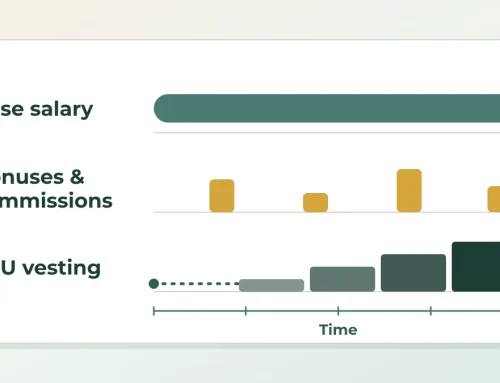
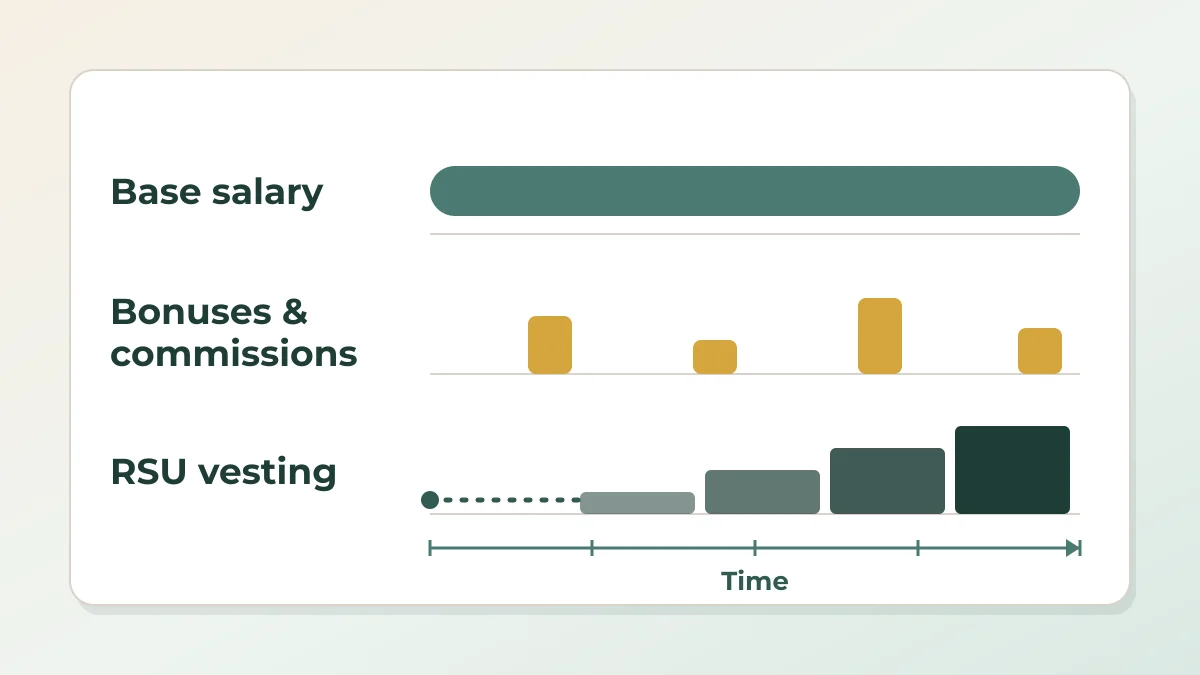
Each spouse completes their own Income and Expense Declaration. Follow the time periods it asks for — last month’s income and the average over the past 12 months can be quite different. If your pay includes bonuses, commissions or stock, bring the detail rather than just your base salary.
If you are self-employed, follow FL-150’s instructions for supporting records, including a profit-and-loss statement for the last two years or a Schedule C from your last federal tax return. Bring current records that explain changes in the business as well. Business revenue, taxable income and cash actually available to the household are three different numbers.
The office’s monthly expense worksheet helps you organize the expense information. If you still live together, one worksheet averaging the past 12 months of shared expenses works well. If you live apart, each of you prepares your own. Average irregular annual costs, and mark which figures are actual current expenses and which are projected costs after separation. A shared worksheet doesn’t replace either spouse’s own declaration.
Example: current bill versus future budget
You share a mortgage now, but one spouse plans to rent an apartment after moving out. List the mortgage as the current expense and model the future rent separately. Keeping the two apart is what lets you both test whether a proposed settlement can actually support two households.
What if I don’t know a value, can’t get records, or we disagree?
Make the uncertainty visible. List the item, say what’s missing, and ask how to complete it. A blank or a zero can mislead when the real answer is “I need more information.” Identifying a missing record is a first step; obtain the information and complete or update the disclosure before relying on it to settle.
For estimates, note the basis: the statement date, the online source, a recent comparable sale. If you and your spouse disagree, record both positions rather than presenting one person’s number as agreed.
If your spouse handled the finances, start with what you know: banks, employers, properties, loans. Scott can help identify what records to request and which questions to ask. Both spouses should have access to the supporting records and an opportunity to understand them before making decisions. Mediation depends on full disclosure and voluntary cooperation; if you believe assets are being hidden or information withheld, independent legal advice and formal discovery may be needed before you can settle with confidence.
Finally, keep things current. Tell the mediator and your spouse about significant changes or newly found items, and update your disclosures before relying on older figures.
How Scott turns financial information into informed decisions
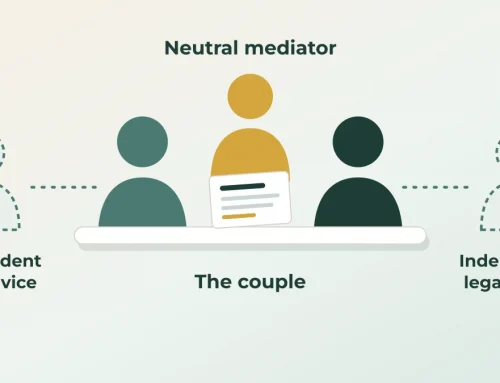
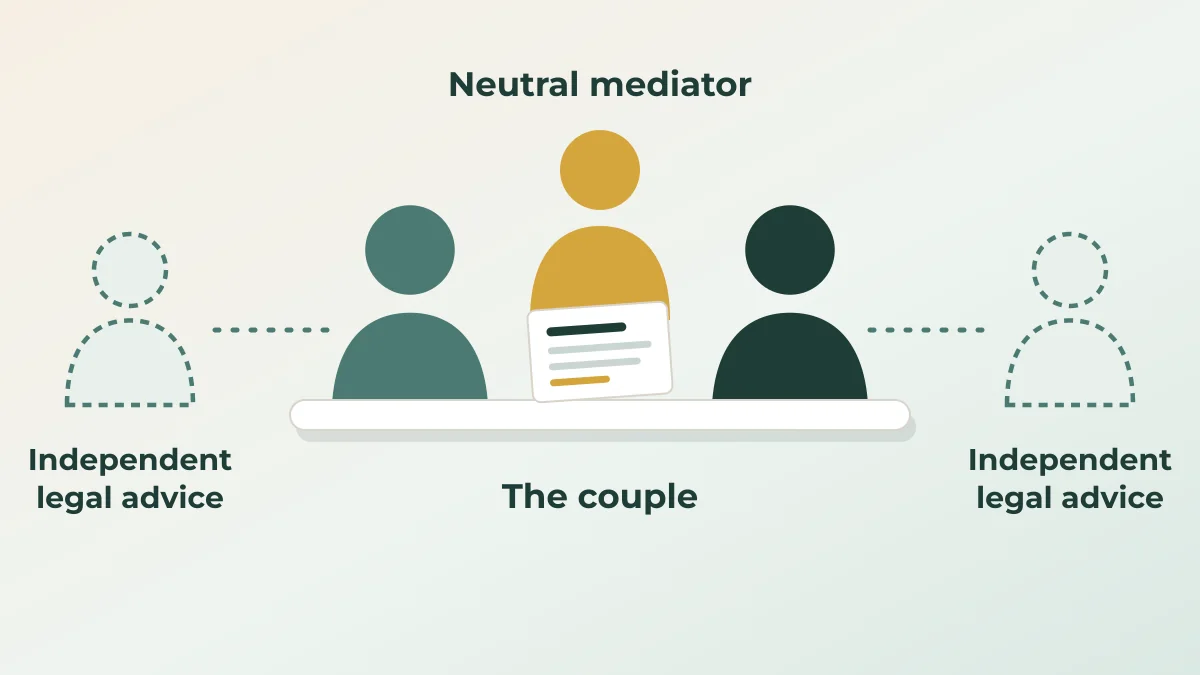
Scott Levin is both a California family law attorney and a Certified Divorce Financial Analyst®. As a neutral mediator for both spouses, he handles the full agreed-divorce process: coordinating the financial disclosures, facilitating your meetings, preparing your Marital Settlement Agreement, and preparing and submitting the judgment paperwork. He provides the disclosure forms and reviews what you complete; each spouse supplies their own information and remains responsible for its accuracy and for exchanging it.
Once the information is gathered, the work shifts to what it means. Which items are agreed? What needs documentation? What needs more analysis? Then you can compare real choices: keeping or selling the home, dividing retirement accounts, handling debts, structuring spousal support. Equal dollar amounts don’t always mean equal value — cash, retirement funds and home equity differ in liquidity and tax consequences. Scott’s divorce financial analysis brings those differences into the discussion so you can see the effect of each option before you agree to it.
Couples anywhere in California can work through these decisions with Scott in statewide divorce mediation, with meetings by Zoom. In separate matters, Scott also provides consulting legal advice to one spouse individually.
You don’t have to negotiate the whole settlement while filling out forms. Establish the information first, then use it to evaluate your options. Read more about divorce mediation.
Financial disclosure preparation checklist
Use this alongside your case-specific instructions. This checklist summarizes the preparation work; the required forms, supporting records and formal exchange remain separate steps.
- List every known asset and debt, including disputed items and separate-property claims.
- Gather recent complete statements; keep marriage- and separation-date records.
- Label each balance or estimate with its date and source.
- List each asset’s value and the debt against it separately.
- Collect tax returns filed in the past two years, W-2s/1099s and two months of pay stubs.
- Gather bonus, stock compensation, business and pension records where relevant.
- List vehicles (owned and leased), life insurance including term policies, rewards points and children’s accounts.
- Complete your own income declaration and an expense worksheet.
- Flag estimates, disagreements, missing records and recent changes.
- Redact Social Security numbers and use the office’s designated delivery method.
- Review and sign your completed disclosures; follow the office’s instructions for service and filing FL-141.
- Update anything significant before finalizing the agreement.
Common questions about financial disclosures
Do I need an appraisal before mediation starts?
Not necessarily. Bring any existing valuations and note their limits. You and your spouse can decide together whether more information is worth getting before you agree on a final value.
Do I list property I owned before the marriage?
Yes. List it, mark your separate-property claim, and keep supporting records. Disclosure doesn’t decide who owns it.
Can we prepare one list together?
A shared working inventory can save time and give everyone the same reference point. Each spouse still completes, reviews, signs and serves their own required disclosure package; a joint spreadsheet alone does not replace that exchange.
Is a statement from a few weeks ago good enough?
A recent statement can be a useful starting point. If you use its balance on FL-142, identify its date and disclose significant changes. Update records when needed before signing an agreement.
What if I’ve never managed our finances?
That’s common, and it’s fine. Start with what you know and bring your questions. The goal is to understand the information before you make commitments, not to arrive with everything figured out.
What happens if something is left off?
Correct it as soon as you notice, by telling your spouse and the mediator and updating the disclosure. Omissions discovered after judgment can lead to the agreement being challenged, which is exactly what careful disclosure up front is meant to prevent.
Prepare with guidance, then decide with confidence
Scott helps couples in San Diego and throughout California organize and understand their financial information and turn it into a written agreement. Consultations are by Zoom or phone, and mediation meetings can be in person at the San Diego office or by Zoom. You don’t need every balance or every valuation answer before you reach out.
Or call 858-293-1410.
Related services
Want to talk through your situation? Book a free 15-minute introductory call.On the booking page, choose “15 Minute Consultation Call.” Paid sessions, such as the Divorce Strategy Session, are listed separately.